
Data-Driven CapEx
Data-Driven CapEx: Turning Reporting into Actionable Investment Strategy
- Sustainable Built Environments
Practices Engaged
- GRESB
Services Delivered
- Residential
Industry Sectors

|
This article was originally published on GRESB. Data-Driven CapEx: Turning Reporting into Actionable Investment StrategyFor most real estate owners and operators, sustainability reporting originates as a portfolio-level mandate driven by investor pressure, emerging disclosure requirements, or corporate decarbonization targets. Yet the moment organizations move from high-level commitments to actual reporting, they often encounter a stubborn gap at the asset level: the absence of reliable, whole-building performance data. Owners are left chasing fragmented tenant information, navigating inconsistent utility access, and patching together estimates that undermine confidence in the reported figures. The resulting reporting effort is both time-intensive and strategically limiting. What often goes unrecognized is that the foundational infrastructure to help close this gap already exists in many markets. In some areas across the U.S. and globally, benchmarking ordinances and utility data sharing through programs such as ENERGY STAR® Portfolio Manager® can help standardize access to whole-building energy data at scale. Infrastructure designed for transparency and local policy compliance can also be leveraged as a powerful foundation for reporting. Perhaps more importantly, this whole-building data unlocks valuable insights that support more effective capital planning. Now, leading real estate companies are recognizing the inefficiency of purely reactive reporting efforts and are instead harnessing their whole-building data to support a portfolio-wide investment strategy. Gathering quality utility, emissions, and building-level dataOne of our long-time clients, a real estate owner-operator with established social and sustainability objectives, engaged Brightworks Sustainability to support the development of a formal sustainability program. Their foremost emphasis was on enabling and formalizing corporate-level reporting protocols. Although sustainability and corporate responsibility were already embedded in the organization’s strategy, the client faced a common operational barrier: fragmented and opaque building systems limited access to consistent, high-quality data. Our team partnered with the client to move them from isolated visibility to full, consistent coverage across their varied portfolio, in part by leveraging the data made available through local utility benchmarking ordinances. Upon initiating this process, Brightworks quickly encountered particular challenges in a multi-block, mixed-use asset due to its highly complex submetering architecture. To unravel this complexity, the team conducted a detailed on-site audit, tracing energy flows from point-of-use meters through aggregation points to utility billing outputs. This rigorous analysis revealed several systemic issues impacting both data quality and operational performance. Commercial tenant submetering configurations were convoluted and inconsistently implemented. Significant portions of residential loads were not captured within the metering schema, resulting in incomplete energy profiles. In addition, the central plant was often operating above design capacity, driven primarily by the outsized refrigeration load of a single tenant. Together, these factors contributed to billing inaccuracies, limited transparency, and constrained the client’s ability to advance sustainability reporting and performance optimization. This utility audit represents just one example of what becomes possible when asset-level data is systematically captured and effectively leveraged. Building on that foundation, Brightworks continued to support the client by producing documentation that could then be integrated directly into the asset’s capital planning process. In parallel, we partnered with the client to establish standardized data governance protocols across the portfolio, creating durable systems for maintaining data quality through tenant turnover, use-type changes, new acquisitions, and responsible handoff at disposition. Where asset-level data becomes portfolio strategyIn our continued engagement with this client, Brightworks has helped take their portfolio of 99 buildings from nearly 0% building coverage of meter-level utility tracking to 78% and 87% energy and water coverage, respectively. This shift enabled comparability across assets, surfaced systemic performance gaps, and created a clear line of sight between building-level operations and corporate sustainability targets. With this improved understanding of whole-building consumption, the client was able to begin translating the disparate utility data points made available through local benchmarking ordinances into a comprehensive, forward-looking roadmap for action. One of the earliest outcomes of this shift has been the client’s ability to develop green lease agreements, which serve as a strong tenant incentive and support ESG reporting commitments for both the client and its tenants. At the same time, year-over-year data accuracy has improved as systems and processes have matured, further reinforcing confidence in the underlying dataset. Most recently, the client engaged Brightworks to support the development of existing-conditions documentation for a multi-building industrial campus. This work added an important layer of validation, strengthening the baseline from which to assess performance and identify opportunities in a complex, harder-to-decarbonize asset class such as industrial. Continuous data improvement is now actively embedded into how the client plans and manages its portfolio. For complex assets with multiple tenants, space types, leasing structures, and shared systems, utility infrastructure and consumption patterns can now be considered for planning purposes alongside traditional inputs. Issues that were previously difficult to isolate can be readily identified. Data availability, structure, and cleanliness are also increasingly considered as part of the client’s acquisition due diligence, reflecting a broader shift toward prioritizing assets that can support robust decision-making across sustainability reporting, capital expenditure planning, and ongoing operational performance. Establishing effective methods for whole-building data coverage fundamentally changes a company’s ability to understand building performance. This effort not only streamlines carbon accounting and GRESB reporting but also creates a durable foundation for ongoing performance management. Ultimately, it allows companies to prioritize capital expenditures at both the asset and portfolio levels. What was once a fragmented reporting exercise can become an integrated system for driving both compliance and capital strategy. Written by Erin Hocking, Corporate Reporting & Strategy Lead, and Randi Bromm, Sustainable Building Performance Lead, Brightworks Sustainability. Image from GRESB. |


Starwood Hotels & Resorts
1 Hotel Hanalei Bay Luxury Resort
Starwood Hotels & Resorts
1 Hotel Hanalei Bay Luxury Resort
Princeville, HI
Brightworks provided LEED certification management and energy services to support Starwood Hotels with the major renovation and rebranding of Kauai’s Princeville Hotel into a flagship 1 Hotel resort focused on sustainable hospitality and wellness. Brightworks collaborated with the design and construction team to incorporate innovative strategies that will save energy and water, improve operations, and protect local ecosystems. Brightworks also delivered comprehensive energy modeling services, which allowed the project team to identify energy conservation measures and evaluate options.
Practices Engaged:
Sustainable Built Environments
Industry Sectors:
Hotel
Building Types:
Hotels & Resorts

Gerding Edlen
5 MLK Apartments
Gerding Edlen
5 MLK Apartments
Portland, OR
This biophilically-designed tower achieved LEED Gold and Fitwel 1 Star certification while also featuring a resiliency program. The building offers 100,000 square feet of offices on lower floors and 220 residential units with landscaped terraces above.
Practices Engaged:
Sustainable Built Environments, Healthier Built Environments
Industry Sectors:
Residential
Building Types:
Luxury Residential

City of Portland
Case Study
City of Portland
Case Study
Practices Engaged:
Healthier Built Environments
Industry Sectors:
Corporate, Government, State & Local
Building Types:
Historic Buildings
Read more
ABB
North American GreenCRREM Assessments
ABB
North American GreenCRREM Assessments
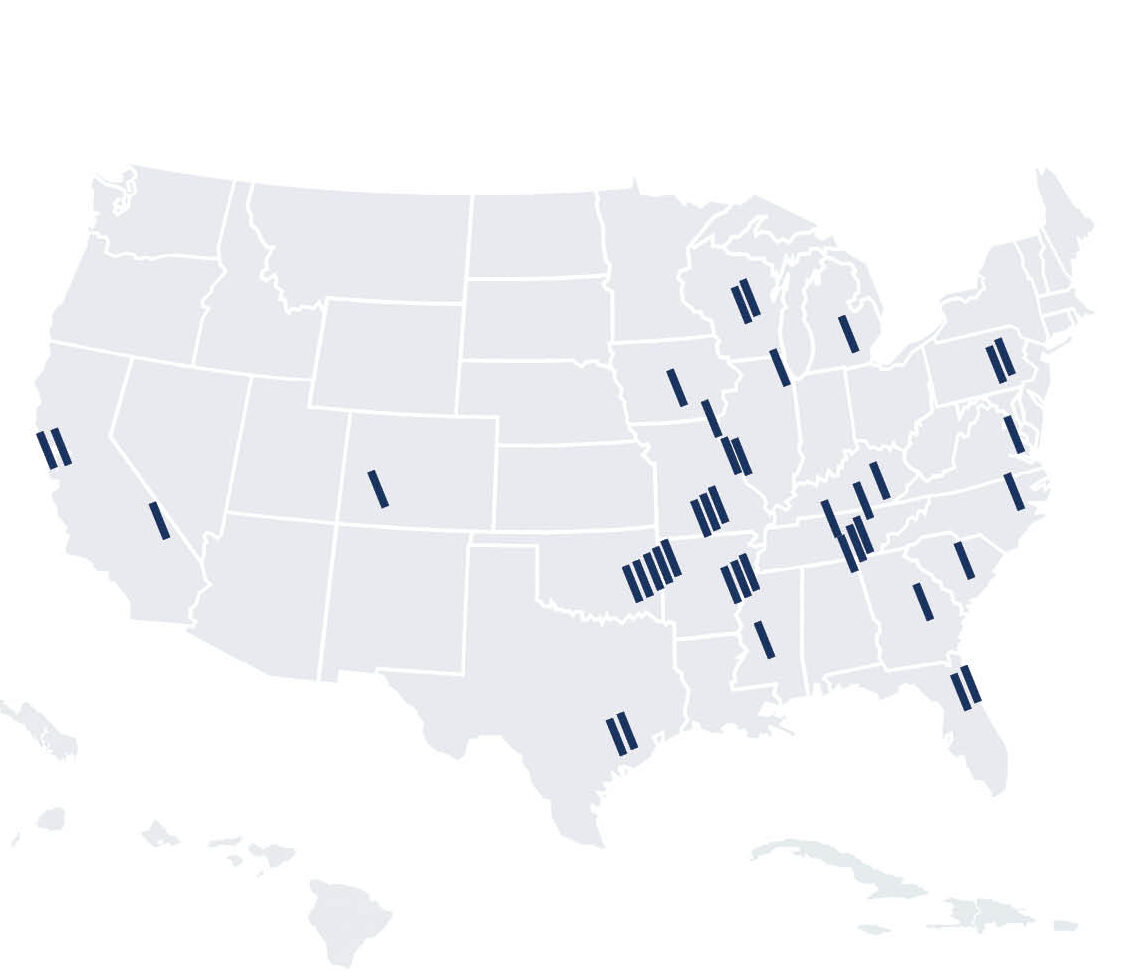
Arkansas, California, Florida, Georgia, Michican, Missouri, Mississippi, North Carolina, New Jersey, New Mexico, Oklahoma, Pennsylvania, South Carolina, Tennessee, Texas, Virginia, Wisconsin, West Virginia
ABB is a global leader in industrial technology. Across 17 states, Brightworks conducted sustainability assessments on more than 50 buildings in ABB's North American portfolio, including manufacturing, office, and warehousing facilities. An extensive report providing a baseline assessment for each site helped ABB prioritize energy efficiency measures, budget for carbon reduction efforts, and calculate ROI as part of its GreenCRREM program.
Practices Engaged:
Sustainable Built Environments, Carbon, Energy
Industry Sectors:
Corporate, Manufacturing

Salesforce
Case Study
Salesforce
Case Study
This letter to the industry highlights the urgent need to address embodied carbon in MEP/IT/AV systems. While operational emissions have seen progress, this embodied carbon remains a challenge. This article reveals insights to guide the industry toward a 50% reduction by 2030 to stay on track for meeting net-zero carbon targets for 2050.
Practices Engaged:
ESG + Corporate Sustainability, Sustainable Built Environments, Carbon, Materials
Read more

AI Meets Lower Carbon Concrete
AI Meets Lower Carbon Concrete
Concrete accounts for 8% of global GHG emissions, which is more than every country except the US and China. Lower carbon concrete is a critical climate solution, but designing it isn’t simple. While AI offers promise, experts warn of its limitations in capturing real-world variables. This post explores why human expertise still leads the way, and how integrative strategies are reshaping concrete’s future.
Practices Engaged:
Materials
Read more
-
U.S. GSA Diplomatic Security OfficeDiplomatic Security Office | Seattle, WA
-
U.S. Social Security Administration OfficeVan Nuys Office | CA